
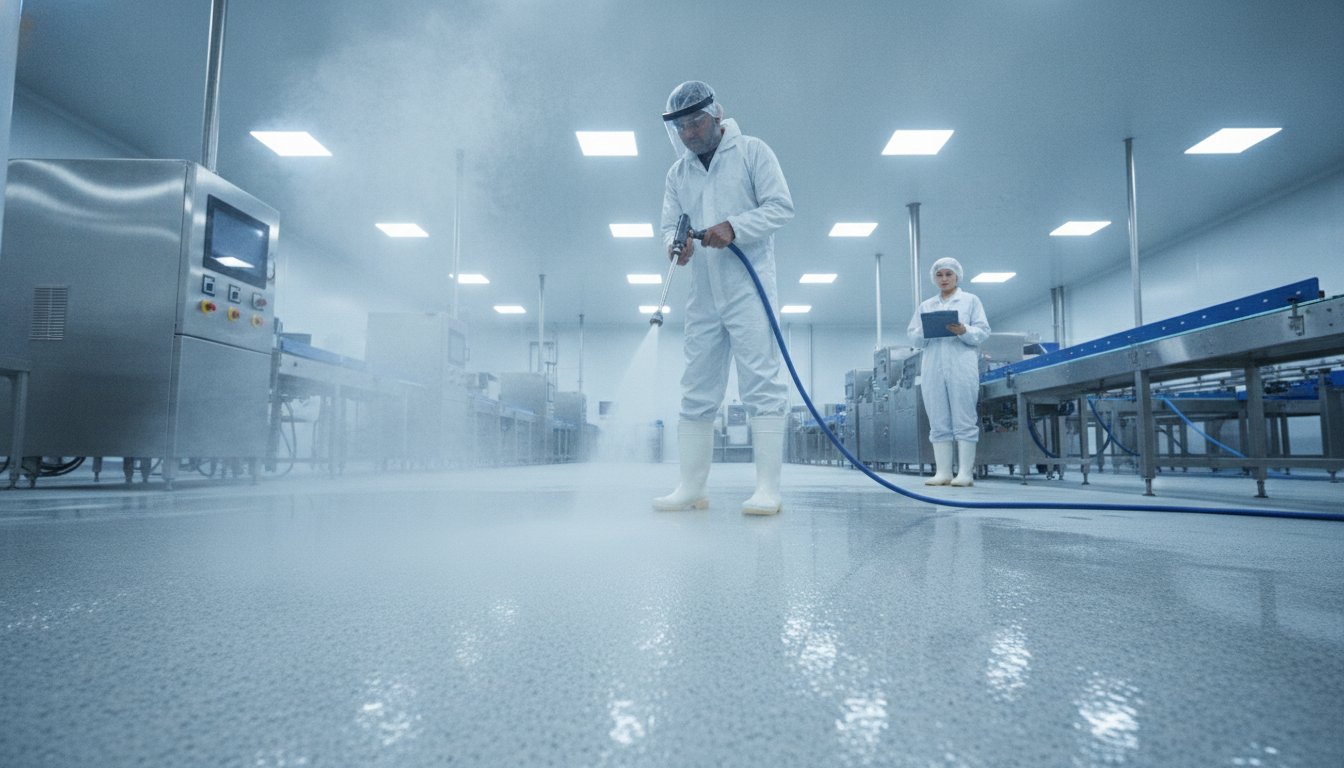
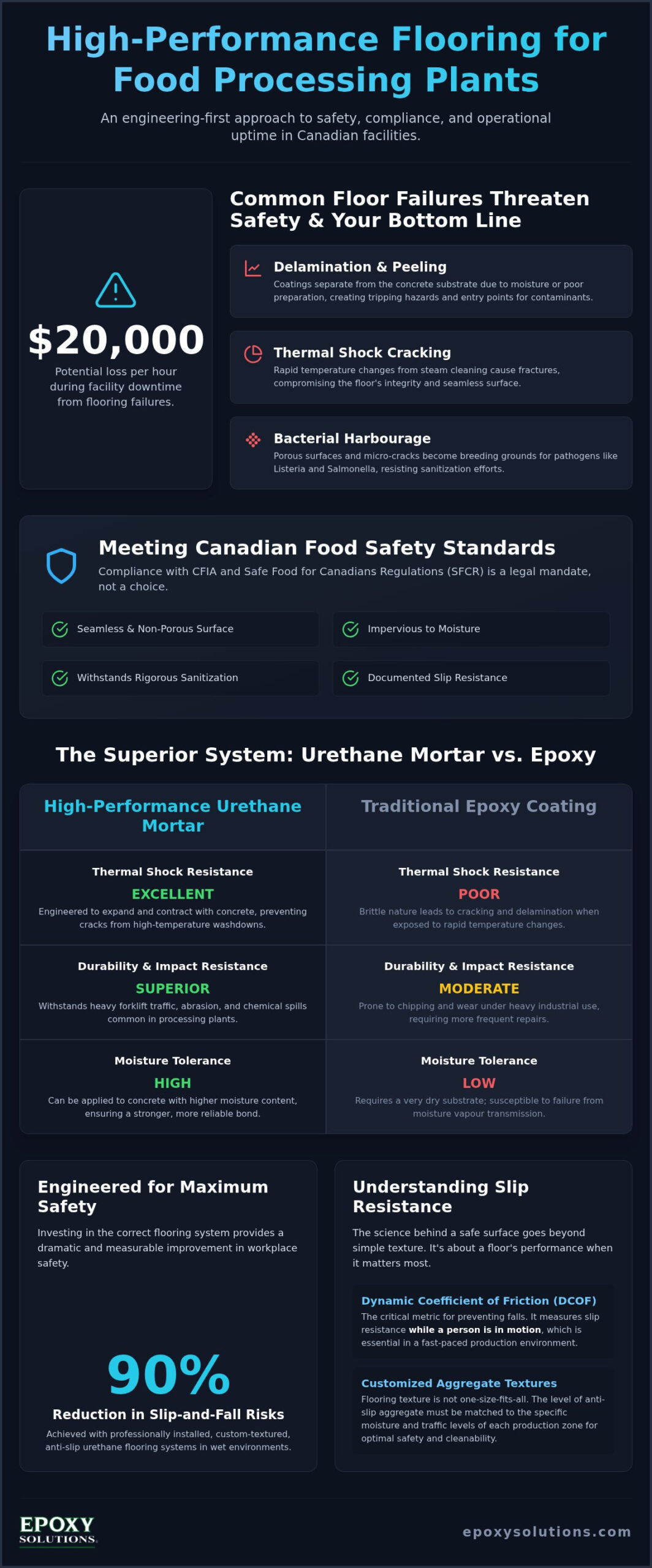
Production shutdowns are expensive. A single facility can lose up to $20,000 per hour during downtime caused by floor maintenance or safety failures. This is a staggering figure that highlights why choosing the right anti-slip flooring for food processing plants is a critical operational decision rather than a simple facility upgrade. You likely realize that a single slip-and-fall incident or a peeling surface can trigger a chain reaction of legal liabilities and failed health inspections. When surfaces fail under the pressure of steam cleaning, the cost of the initial repair suddenly skyrockets.
It’s frustrating to watch a floor fail because it wasn’t engineered for the thermal shock of a daily washdown. This article explains how to specify high-performance, anti-slip flooring that meets the latest Canadian food safety standards while surviving the most aggressive industrial cleaning cycles. We’ll explore the technical advantages of urethane mortars, the impact of the Safe Food for Canadians Regulations, and the precise methods used to create a seamless, non-porous finish that provides a 90% reduction in slip-and-fall risks while remaining durable in wet environments.
Key Takeaways
- Learn why high-performance urethane mortar is the superior engineering choice for high-temperature washdown zones where traditional epoxy often fails.
- Understand the specific CFIA and SFCR requirements for seamless, non-porous surfaces to ensure your facility maintains strict hygiene compliance.
- Discover how to specify the correct anti-slip flooring for food processing plants by matching aggregate textures to the unique moisture levels of each production zone.
- Realize the significant long-term cost savings achieved by investing in industrial flooring systems that resist peeling and thermal shock.
- Identify the diagnostic steps necessary to evaluate previous floor failures and implement a tailored, permanent solution.
The High Stakes of Flooring in Food Processing Plants
Industrial flooring is a battleground. In a food processing facility, the floor is the most abused asset in the building, subjected to a relentless cycle of heavy forklift traffic, corrosive chemical spills, and extreme temperature swings. Most plants ignore their floors until the concrete starts to spall or a worker ends up in the emergency room. This reactive approach is a recipe for operational disaster. Specifying the correct anti-slip flooring for food processing plants is not a cosmetic choice; it is a fundamental engineering requirement for safety and longevity.
When a floor fails, it rarely happens all at once. Instead, small issues compound into systemic risks that threaten your safety record and your bottom line. Common failure modes include:
- Delamination: The coating peels away from the substrate, often caused by moisture vapour transmission or poor surface preparation.
- Thermal Shock Cracking: Rapid temperature changes during steam cleaning cause the concrete and the topping to expand at different rates, leading to deep fractures.
- Bacterial Harbourage: Microscopic pits and cracks become breeding grounds for pathogens that survive even the most rigorous cleaning cycles.
The Cost of Non-Compliance in Canada
Liability is a heavy burden for Canadian plant managers. A single slip-and-fall incident can lead to massive legal settlements, increased insurance premiums, and a permanent stain on your corporate reputation. Regulators and insurance adjusters now look for documented proof of safety measures. This is why we emphasize the importance of Sustainable Slip Resistance testing to ensure your floor remains safe throughout its entire lifecycle. Standard epoxy often fails under aggressive Canadian sanitation protocols because it lacks the chemical bond necessary to withstand constant saturation. Without documented slip resistance, your facility is legally exposed.
Bacterial Growth and Porous Surfaces
Sanitation is non-negotiable in food production. Traditional concrete is naturally porous, acting like a sponge for organic waste and washdown water. Even poorly installed epoxy can develop microscopic cracks that are invisible to the naked eye but large enough to house colonies of Listeria or Salmonella. In these environments, “seamless” is a functional necessity rather than a buzzword. A truly non-porous surface prevents the accumulation of waste in hard-to-reach joints and corners. Biofilm formation on industrial floors is the development of a complex, protective matrix of microorganisms that adheres to microscopic surface imperfections and resists standard chemical sanitization efforts. By installing a high-performance, anti-slip flooring for food processing plants, you eliminate these hiding spots and ensure your facility passes every health inspection with total confidence.
Canadian Standards for Anti-Slip Flooring Compliance
Compliance isn’t a suggestion. It’s a legal mandate. For facilities in Toronto, Mississauga, or Brampton, meeting Canadian food safety standards requires more than just a durable coating. It demands an engineered system that satisfies the Canadian Food Inspection Agency (CFIA) and the Safe Food for Canadians Regulations (SFCR). Every square inch of anti-slip flooring for food processing plants must be non-absorbent, impervious to moisture, and capable of withstanding rigorous chemical sanitization without degrading. If your surface absorbs even a fraction of washdown water, you aren’t just failing an audit; you’re creating a biohazard.
Epoxy Solutions™ has spent over four decades ensuring that GTA facilities don’t just meet these codes but exceed them. We understand that provincial health inspectors and federal auditors look for specific performance characteristics that cheap, “off-the-shelf” coatings simply can’t provide. Our installations are designed to provide legal protection through documented slip-resistance compliance and long-term durability.
Understanding Coefficient of Friction (COF)
Facility managers often overlook the critical distinction between Static and Dynamic Coefficient of Friction (COF). Static COF measures the resistance required to start a slide, whereas Dynamic COF measures the resistance while a person is already in motion. In a high-speed production environment, Dynamic COF is the metric that actually prevents catastrophic injuries. In wet food processing zones, the Coefficient of Friction (COF) is defined as the numerical value representing the ratio of frictional force to the normal force between two surfaces, determining the degree of slip resistance provided to workers on surfaces contaminated by water, oils, or organic waste.
CFIA and Health Canada Expectations
Hygiene and safety are often at odds in poorly designed plants. An overly aggressive texture provides excellent grip but traps organic debris, making it nearly impossible to sanitize. CFIA inspectors specifically look for seamless transitions and integral coving that eliminates 90-degree corners where bacteria thrive. For a deeper dive into these technical requirements, consult our Industrial Flooring Specs: Engineering Guide for 2026. While we focus on Canadian law, benchmarks like the USDA Sanitation Performance Standards demonstrate that international expectations for non-porous, easily cleaned surfaces are becoming increasingly aligned. If your facility is currently struggling with porous surfaces or peeling transitions, it’s time to speak with an expert who can resolve these compliance gaps permanently.
Urethane Mortar vs. Epoxy: Choosing the Right System
Price is a poor metric for performance. Many facility managers choose standard epoxy because of the lower upfront cost, only to watch it delaminate within eighteen months. In a high-demand environment, the choice of anti-slip flooring for food processing plants often comes down to a technical battle between traditional epoxy and high-performance urethane mortar. While epoxy is an excellent choice for dry packaging areas or corridors, it lacks the molecular flexibility required to survive the thermal and chemical onslaught of a primary production floor. Urethane mortar is the definitive answer for wet zones because it’s engineered as a cementitious system that bonds deeply with the concrete substrate.
Epoxy Solutions™ specializes in identifying these material mismatches before they become costly failures. We’ve seen countless plants where “standard” coatings were applied in areas they were never designed to handle. True engineering excellence means selecting a system that doesn’t just look good on day one, but maintains its integrity after years of heavy traffic and aggressive sanitization.
Thermal Shock: The Silent Floor Killer
Thermal shock is the primary reason floors peel in Mississauga and Brampton plants. When you hit a cold floor with 80°C pressurized water during a washdown, the materials expand rapidly. Standard epoxy is rigid and brittle; it cannot move with the concrete. This creates massive internal stress that eventually snaps the bond, leading to the dangerous peeling seen in many failed facilities. Urethane mortar has a coefficient of thermal expansion nearly identical to concrete. It expands and contracts in unison with the slab, ensuring the anti-slip flooring for food processing plants remains intact through thousands of steam-cleaning cycles.
Chemical Resistance Profiles
Food production is a chemically hostile environment. Blood, fats, sugars, and organic acids are surprisingly corrosive, acting as slow-motion solvents on inferior coatings. High-performance resinous systems are tailored to withstand these aggressive elements alongside the caustic degreasers required for daily sanitization. While we usually recommend urethane for wet zones, understanding the specific grades of resin is vital for long-term durability. You can find more detail in our High-Performance Epoxy: Guide for Industrial Facilities. Choosing the right system means analyzing your specific chemical exposure and temperature fluctuations before a single drop of resin is mixed. We don’t just provide a coating; we provide a tailored chemical barrier designed for your specific production line.
Customizing Anti-Slip Textures by Facility Zone
One-size-fits-all flooring is a dangerous myth. A texture that provides adequate grip in a dry packaging room will be a skating rink in a meat processing washdown zone. Conversely, an aggressively abrasive floor in a dry warehouse creates unnecessary friction that shreds forklift tires and makes routine dust mopping impossible. Engineering the correct anti-slip flooring for food processing plants requires a zone-specific strategy that balances mechanical traction with sanitization requirements. We don’t just coat a floor; we map the facility’s risks to ensure the texture matches the environment.
Wet Zones: Managing Fats, Oils, and Water
In primary production areas where water, animal fats, or oils are constant contaminants, the surface profile must be aggressive. We utilize specific aggregate suspension techniques, typically choosing between quartz and aluminum oxide based on the anticipated chemical and mechanical load. Quartz offers a functional grip with a cleaner aesthetic, while aluminum oxide provides extreme hardness for environments with high-wear potential. The critical engineering goal is ensuring the “peaks” of the texture remain above the liquid film to maintain traction during a spill. For more on these specialized builds, see our Seamless Resinous Flooring Systems for Food Processing.
Traffic and Impact Zones
Dry storage and packaging areas require a more nuanced profile. Here, the floor must support heavy forklift and pallet jack movement without causing excessive vibration or mechanical resistance. Impact resistance is a vital safety feature in these zones. A floor that cracks under the weight of a dropped pallet or a shifting rack creates immediate trip hazards and new bacterial harbourage points. We specify high-performance resinous systems that maintain their anti-slip integrity even under constant mechanical wear, ensuring the surface doesn’t “buff out” and become polished over time.
Cold storage and freezers present their own set of logistical challenges. These environments require resinous systems that can be installed and cured at sub-zero temperatures without sacrificing bond strength. The materials must remain flexible enough to resist the brittle cracking caused by extreme cold while still providing the necessary grip for foot traffic and machinery. If you’re tired of a generic solution that fails in your most demanding rooms, contact us for a zone-specific diagnostic audit to ensure every area of your plant is safe and compliant.
The Epoxy Solutions™ Approach to Food Plant Safety
Results matter more than fluff. Since 1981, Epoxy Solutions™ has provided high-performance resinous flooring that survives where cheaper coatings fail. Our 40-year legacy in Canada is built on a “Problem-First” diagnostic process. We don’t just offer a generic quote based on square footage. We analyze your specific production environment to determine exactly why your current anti-slip flooring for food processing plants is peeling or harbouring bacteria. This technical scrutiny ensures our specifications become the industry benchmark for longevity and safety.
Precision execution is the only way to manage tight production schedules. We understand that every hour of shutdown translates to lost revenue in a high-volume facility. Our rapid-cure resinous systems are installed with surgical accuracy by seasoned professionals who know how to work under pressure. We don’t cut corners on cure times or material thickness. This disciplined approach allows your facility to return to full operation with a floor that is engineered to last for decades, not just until the next inspection cycle.
Expert Installation in the GTA
Local knowledge is vital for meeting Ontario’s industrial standards. We provide specialized installation services across Toronto, Mississauga, Brampton, Milton, and Vaughan, ensuring every project meets the highest technical accuracy. Professional installation is the only way to truly guarantee CFIA compliance and long-term legal protection. Our commitment to meticulous surface preparation is the foundation of our success. We realize that your facility’s safety record and operational efficiency depend entirely on the mechanical bond we create between the substrate and the safety topping.
Your Next Steps for a Safer Facility
Proactive maintenance is always cheaper than emergency repair. Don’t wait for a catastrophic slip-and-fall incident or a failed health inspection to address your floor’s deficiencies. A site-specific flooring audit identifies hidden risks like microscopic cracks or sub-surface moisture before they compromise your anti-slip flooring for food processing plants. We’ll evaluate your zone-specific needs, from high-heat washdown areas to sub-zero freezers, and provide a documented path toward total compliance. Request a professional consultation for your food processing facility today and partner with the industry veteran that prioritizes your plant’s long-term performance.
Engineering Longevity into Your Production Floor
Compromise is not an option when worker safety and regulatory compliance are on the line. We’ve established that the most durable anti-slip flooring for food processing plants isn’t a commodity; it’s a technical system tailored to survive thermal shock and aggressive sanitization. Whether you’re managing a high-heat washdown zone or a sub-zero freezer, your floor must remain non-porous and seamless to protect against bacterial growth and legal liability. Choosing the wrong material leads to delamination and failed audits, but an engineered solution provides a permanent shield for your operations.
Epoxy Solutions™ has spent more than four decades setting the standard for industrial flooring in Toronto, Mississauga, and Brampton. Trusted by GTA industrial leaders since 1981, we specialize in CFIA-compliant installations that resolve chronic failures where others have walked away. You don’t have to settle for peeling coatings or slippery surfaces that put your production at risk. Take control of your facility’s safety record today by partnering with a veteran team that prioritizes long-term performance over the lowest bid. Secure your facility with a custom anti-slip flooring solution from Epoxy Solutions™. We’re ready to help you build a safer, more efficient production environment.
Frequently Asked Questions
Does anti-slip flooring make the floor harder to clean in a food plant?
Properly engineered anti-slip flooring for food processing plants does not impede sanitization. The key is selecting a texture that provides mechanical traction without creating deep crevices that trap organic waste. We use specific aggregate suspension techniques that allow cleaning chemicals and pressurized water to reach every part of the surface. This ensures you maintain high hygiene standards while protecting workers from slips in wet production environments.
What is the difference between epoxy and urethane mortar for food processing?
The primary difference lies in thermal shock resistance and molecular flexibility. Standard epoxy is a rigid coating that often fails when exposed to hot-wash cycles or steam cleaning. Urethane mortar is a cementitious system that expands and contracts at a similar rate to the concrete slab. This makes urethane the superior choice for primary production zones, whereas epoxy is better suited for dry packaging areas in Mississauga and Toronto facilities.
How long does it take to install anti-slip flooring in a manufacturing environment?
Installation timelines typically range from two to four days depending on the zone size and required surface preparation. We utilize rapid-cure resinous systems to minimize production downtime for GTA industrial leaders. Meticulous mechanical preparation, such as shot blasting, is necessary to ensure a permanent bond. Once the final topcoat is applied, many systems allow for light foot traffic within hours and full operational use shortly after.
Is anti-slip flooring required by Canadian law for food processing?
Canadian law, specifically the Safe Food for Canadians Regulations (SFCR), mandates that floors be non-absorbent and easy to clean. While the regulations don’t specify a numerical slip-resistance rating, CFIA inspectors require facilities to maintain a safe working environment. Installing anti-slip flooring for food processing plants is the industry standard for meeting these safety obligations and protecting your business from legal liability and potential health inspection failures.
Can anti-slip flooring be installed in cold storage or freezer rooms?
Resinous flooring can be installed in sub-zero environments using specialized low-temperature cure resins. These systems are engineered to bond and harden in conditions where standard coatings would fail to cure. The resulting surface remains flexible enough to resist brittle cracking caused by extreme cold. This ensures that forklift operators in Brampton and Milton warehouses have consistent traction when moving between ambient production zones and cold storage units.
How often should anti-slip flooring be inspected for wear?
We recommend a formal inspection of high-traffic zones every month to identify early signs of mechanical wear or aggregate loss. A comprehensive facility-wide audit should occur annually. In plants with heavy forklift movement or aggressive chemical exposure, the anti-slip texture can eventually polish down. Regular monitoring allows you to apply a fresh topcoat before the substrate is compromised, preventing the need for a full and costly floor replacement.
What aggregate is best for slip resistance in wet oily environments?
Aluminum oxide is generally the best aggregate for wet and oily environments due to its extreme hardness and angular structure. It provides superior mechanical grip even when a liquid film covers the floor. For areas with less aggressive requirements, quartz is a common alternative that provides a balance between traction and aesthetic appeal. The choice depends entirely on the specific fats and oils used in your production line.
Can you install new resinous flooring over existing damaged concrete?
New resinous systems can be installed over damaged concrete provided the substrate is mechanically prepared and structurally sound. We use industrial grinders and shot blasters to remove contaminants and open the concrete pores. Deep cracks and spalled areas are repaired using high-strength fillers before the main system is applied. This creates a seamless, reinforced surface that is often significantly stronger than the original concrete slab it covers.