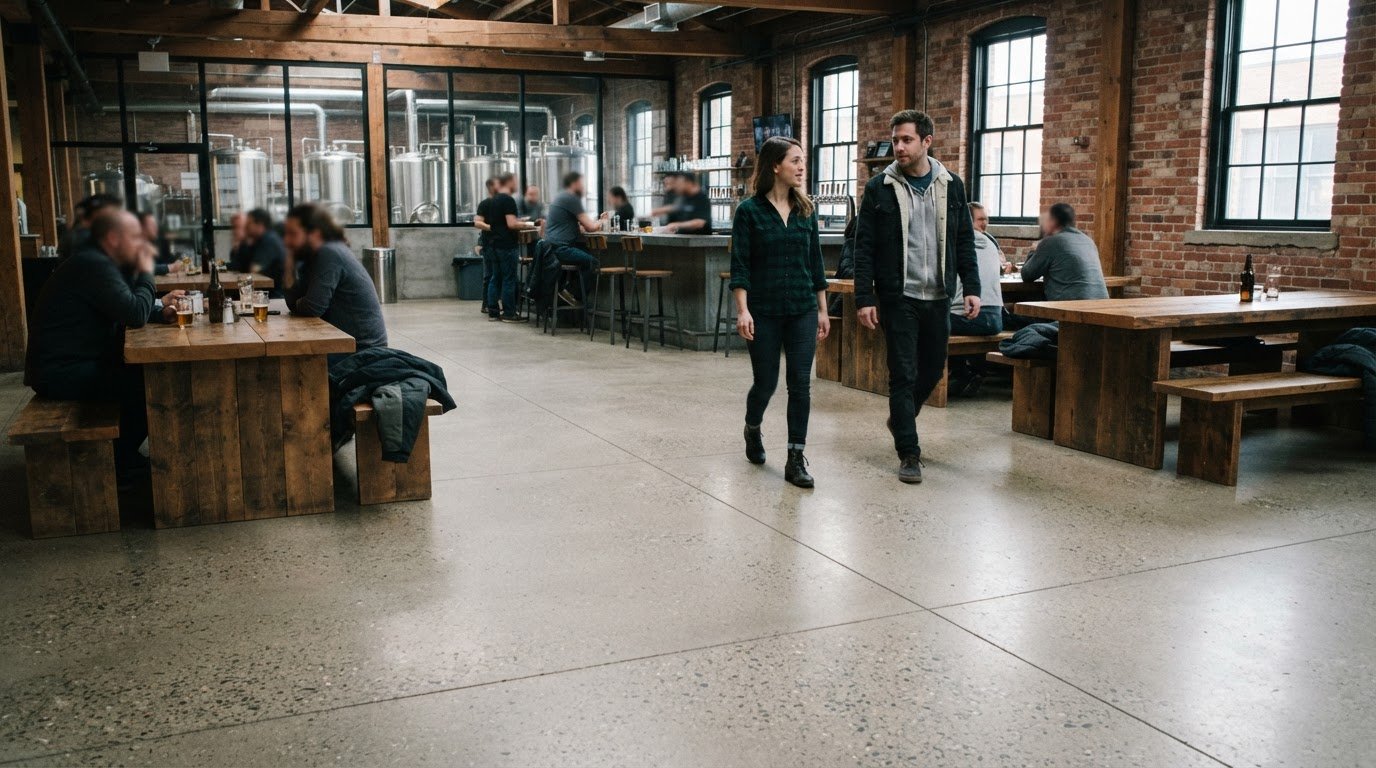
Polished concrete can make an existing slab a durable, low-waste floor rather than a surface that needs replacing. When properly maintained, it should generally last at least 20 years, and local concrete polishing experts in Toronto can assess whether the slab is suited to a refined, easy-to-maintain finish. The advantages are strongest when the concrete is prepared carefully and the finish matches how the space is used.
Polished concrete’s long service life and straightforward upkeep are appealing, but the slab’s condition and project scope still matter. This guide explains the practical benefits of polished concrete, what affects project costs in Toronto, and how grinding and preparation shape the finished floor. You’ll also learn where polished concrete fits in commercial and industrial spaces and what to expect when planning the work.
Key Takeaways
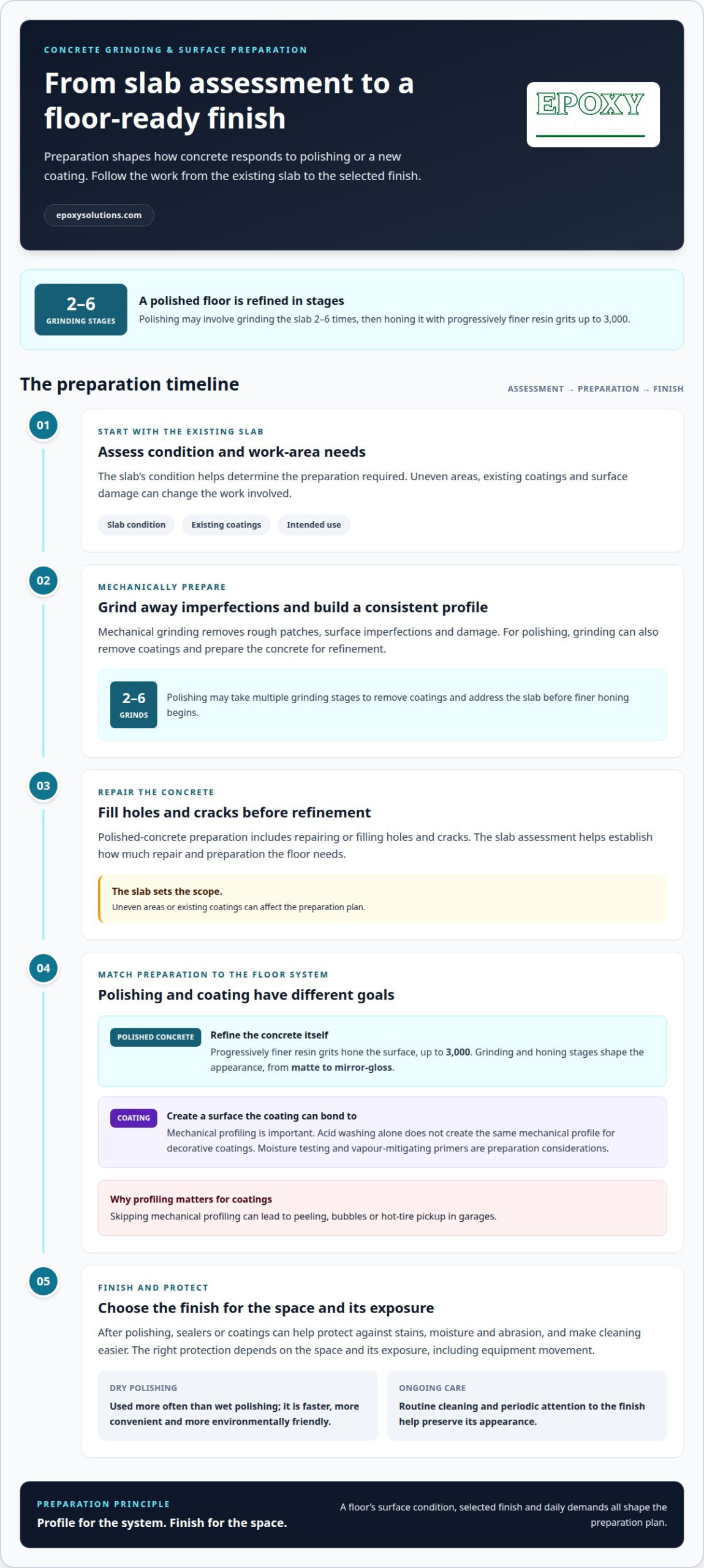
- Polishing can involve grinding the slab 2 – 6 times, then refining it with resin grits up to 3,000 to achieve the intended finish.
- Project costs depend on the slab’s condition, preparation needs, floor area and finish, so scope matters more than a generic estimate.
- For commercial and industrial spaces, match the floor system to traffic, equipment and the demands of the work area.
- Mechanical grinding removes surface imperfections and prepares concrete for polishing or coatings; skipping proper profiling can compromise the finished surface.
What are the advantages of a polished concrete floor?
Polished concrete keeps the existing slab in use, reducing the need for new flooring materials and helping limit waste. Compared with epoxy, it exposes and refines the concrete itself; terrazzo uses decorative aggregates in a binder, while other flooring options can provide different colours, patterns or surface characteristics.
Preparation determines the result. The process may grind a concrete floor 2 – 6 times to remove coatings and address holes or cracks, then refine the surface with resin grits up to 3,000. A polished finish can range from matte to mirror-gloss, depending on the grinding and honing stages. The slab’s condition influences how much repair and preparation the project needs.
Existing concrete can suit a retail store, office, showroom, warehouse, factory or garage, but the finish should reflect how each space operates. A showroom may benefit from a reflective surface that helps distribute available light. A warehouse needs a floor suited to regular movement and equipment. Local concrete polishing experts in Toronto can assess the slab and tailor the finish to the setting.
Design options vary, too. Concrete staining can add a variegated, marble-like appearance, while grinding can reveal the slab’s natural character. Epoxy coatings offer a separate decorative or functional surface, and floor logos can be incorporated into a coating design where branding is needed. These methods aren’t interchangeable: the right choice depends on the desired appearance, existing concrete and daily use.
Maintenance matters. Properly maintained polished concrete should generally last at least 20 years. Routine care usually involves sweeping and occasional mopping, while commercial floors may need periodic burnishing to maintain gloss. For a warehouse, retail floor or office, the practical advantage is a durable surface made from the concrete already in place, with the preparation and finish matched to the space.
How much does polished concrete cost in Toronto?
Project pricing depends on the scope and is provided after a quote request. Key cost factors include floor area, slab condition, repairs, access and finish requirements. A clean, open commercial floor needs different preparation from an industrial space with damaged concrete, existing coatings or restricted work areas. The selected polishing level and project schedule also shape the scope.
Scale varies across the Toronto and GTA market. A manufacturing-floor project in Etobicoke lists 10’000 sqft, while a Mississauga warehouse project lists 25’000 sqft. These examples show why an estimate needs to account for the actual facility, not just its use category. Polished concrete can serve residential, commercial and industrial spaces, with preparation planned around the slab and the work taking place there.
Toronto concrete polishing companies can be compared by reviewing relevant project experience, written warranty terms and feedback that speaks to similar facilities. A warehouse reference, for example, is more relevant to heavy equipment than a residential-floor example. Experience should connect the contractor’s process to the site’s actual requirements.
Permit needs depend on whether the planned work is limited to polishing or includes broader building alterations. For a Toronto project, define the scope clearly before planning, especially if the work extends beyond the floor surface.
Choose a flooring company that explains slab assessment, grinding, repairs, finish selection and protection in a clear sequence. For a commercial or industrial facility, the plan should account for traffic, equipment and exposure to spills or stains.
Polished concrete resists spills, stains and moisture, but maintenance still matters: routine cleaning and periodic attention to the finish help preserve its appearance. A quote request should include the site location, approximate floor area, current surface condition, intended use and desired finish. Those details give the estimator a practical basis for defining the work. To discuss polished concrete flooring, share the project scope and site details.
Concrete grinding and surface preparation
Preparation determines how concrete responds to polishing or a new coating. Mechanical grinding removes rough patches, imperfections and surface damage, and creates a consistent profile for the next installation step. In a warehouse, for example, grinding can address worn traffic lanes before the floor receives its final finish. Acid washing alone doesn’t create the same mechanical profile for decorative coatings.
Polished concrete moves from repair to refinement. The floor is ground, holes and cracks are repaired or filled, and progressively finer abrasives hone the surface. Polishing smooths and densifies the concrete, while the selected grinding stages shape its final appearance. A slab assessment helps determine the preparation required; uneven areas or existing coatings can change the work involved.
Coating preparation has a different goal: creating a surface the coating can bond to. Skipping mechanical profiling can lead to peeling, bubbles or hot-tire pickup in garages. For decorative coating projects in Toronto, moisture testing and vapour-mitigating primers are important preparation considerations. The surface profile, moisture conditions and selected coating all affect the installation plan.
After polishing, sealers or coatings can protect floors from stains, moisture and abrasion while making cleaning easier. The right protection depends on the space and its exposure. A warehouse with regular equipment movement has different demands from an office or showroom, so account for those conditions before selecting the finish.
Dry polishing is used more often than wet polishing because it’s faster, more convenient and more environmentally friendly. Once grinding and repairs are complete, the selected finish can be applied to the prepared concrete. For a commercial space receiving a coating, accurate profiling is a functional requirement, not a cosmetic detail. It supports adhesion and helps reduce common finish failures.
Polished concrete services in Toronto and the GTA
Concrete polishing projects in Toronto and the GTA can include new work or upgrades to existing commercial slabs. Applications include warehouses, manufacturing floors, retail spaces and showrooms. The right techniques depend on slab condition, planned finish and expected traffic. Existing concrete can be polished later; there’s no strict deadline for upgrading a commercial floor.
Project examples show the range of local facility requirements. A manufacturing-floor project in Etobicoke covers 10’000 sqft, while a warehouse project in Mississauga covers 25’000 sqft. Those different settings require planning around the floor area and how each space operates. For a retail store, the finish may emphasize appearance; for an industrial facility, equipment movement and surface exposure shape the project scope.
Polishing starts with the existing slab, not a new flooring layer. Grinding removes surface imperfections, and progressive polishing steps refine the concrete. Repairs address cracks or holes before the finish is completed. Where grease, oil or chemicals are expected, a sealant can help protect the surface. Choose protection for the facility’s actual exposure rather than applying the same approach to every floor.
Traffic also affects the finish plan. A busy showroom needs a consistent appearance across customer-facing areas, while a warehouse floor must suit regular movement and work demands. Polished concrete is a durable option for commercial or industrial spaces, but other systems may better meet requirements such as UV exposure or static control. Match the floor system to the task rather than treating every concrete surface alike.
For Toronto and GTA projects, the practical takeaway is to define the site, floor use, slab condition and desired finish before work begins. Those details guide preparation, polishing techniques and surface protection. Existing floors can be considered as retrofit projects, while new facilities can plan the concrete finish as part of installation. Plan a polished concrete project around your facility’s floor and operating needs.
Epoxy Solutions™: Polished concrete
Epoxy Solutions™ installs polished concrete for commercial and industrial floors where the existing slab can be refined into a finished surface. The approach suits projects that need tailored concrete preparation, appearance and performance for everyday use. For spaces with different requirements, Epoxy Coatings & Installation, UV Resistance Flooring and Anti-Static Flooring are also available.
Turn to Epoxy Solutions™ when planning a polished concrete floor or considering an upgrade to an existing one. Sharing the space’s intended use, slab condition and preferred finish helps define the project scope. Those details also help distinguish polishing from a coating system suited to a particular operating environment.
Contact Epoxy Solutions™ to discuss your polished concrete project.
Plan the right floor for what comes next
A flooring decision should support how your space operates, not just how it looks on installation day. Before moving ahead, define the demands the floor must meet, including the activity in the space, the finish you want and any performance requirements that matter to your operation. This gives the project a clear direction.
Local concrete polishing experts in Toronto can help turn your priorities into a practical flooring plan. Polished concrete may suit a project where refining the existing slab is the goal. For different requirements, Epoxy Solutions™ also offers Epoxy Coatings & Installation, UV Resistance Flooring and Anti-Static Flooring. The right fit depends on the work the floor needs to support.
Take the next step with a clear description of your space and flooring goals. Contact Epoxy Solutions™ about your floor to discuss the project. A well-planned floor starts with a defined purpose, and that’s a solid foundation for moving forward.
Frequently Asked Questions
Is polished concrete slippery or cold?
Polished concrete can feel cool underfoot, and its grip depends on the finish and conditions. A smooth floor may feel different from a textured one, while moisture or spills can affect footing on any hard surface. For a busy entrance or work area, consider how people use the space and manage spills before choosing a finish.
Can You Polish Concrete without Professional Help?
It’s possible to attempt concrete polishing without professional help, but the work requires suitable grinding equipment and control through successive abrasive stages. Uneven passes can leave visible variations, especially where light crosses a large floor. A small, inconspicuous test area can show how the concrete responds, but it won’t predict every condition across a larger slab.
Do you polish commercial and warehouse floors?
Yes, polished concrete is an option for commercial and warehouse floors. The project plan should reflect the facility’s daily operations, including vehicle routes, storage zones and areas that need to remain accessible. For example, a warehouse with active loading areas needs a workable plan for dividing the floor into sections and coordinating access during installation.
What is Concrete Floor Finishing & How Does It Work?
Concrete floor finishing means treating a slab to achieve its intended appearance and surface performance. For polishing, the process typically includes preparing the concrete, refining it through grinding and honing, then applying a selected protective treatment if needed. The finish may look different under showroom lighting than under warehouse lighting, so viewing a sample in the space can help clarify its appearance.
What services do Toronto concrete polishing experts offer for residential and commercial floors?
Epoxy Solutions™ installs polished concrete and resinous flooring for residential, commercial and industrial clients. Options include Epoxy Coatings & Installation, UV Resistance Flooring, Anti-Static Flooring, Chemical Resistance Flooring, Line Marking, Safety Flooring, Traffic Toppings and Tank Lining. For properties in Toronto, Mississauga, Brampton, Milton and Vaughan, the right system depends on the floor’s intended use and the space’s performance requirements.
How much does concrete polishing cost per square foot in Toronto?
There’s no single per-square-foot price for every Toronto floor. Project pricing depends on the scope and is provided after a quote request. Factors such as slab condition, required repairs, floor area, access and finish influence the work involved. A marked-up floor plan showing work zones and restricted areas can help describe the project clearly when requesting a quote.