
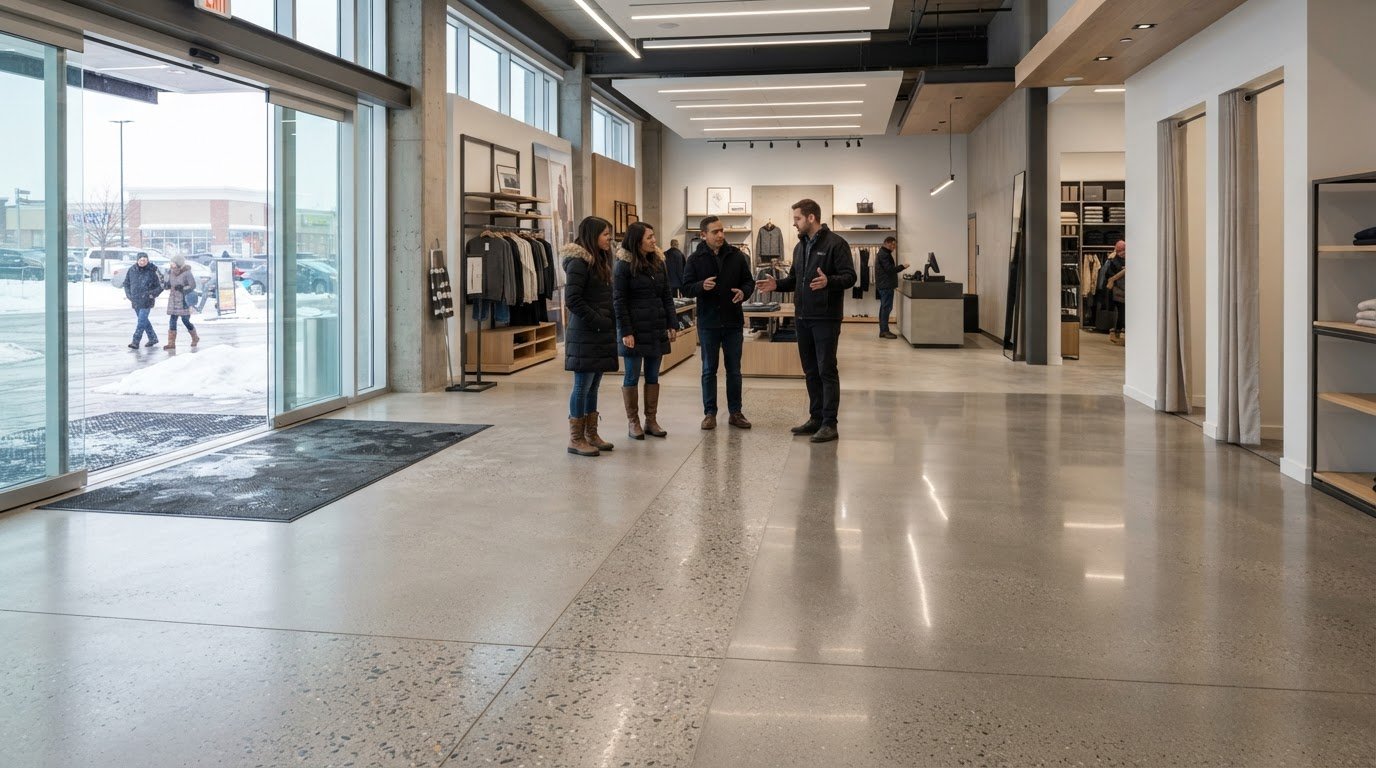
For retailers planning retail store polished concrete Vaughan projects, a polished finish can’t compensate for a slab that isn’t ready. The decision starts with more than appearance: the existing concrete, customer traffic, cleaning routines, and opening plans all affect whether polished concrete is the right fit.
It’s reasonable to want a durable floor that suits your store’s design without creating avoidable disruption. This buyer’s guide will help you compare polished concrete with resinous flooring, identify slab and finish factors to assess, and plan installation around store operations. Epoxy Solutions™ provides commercial polished concrete and resinous flooring installation.
The right choice depends on site conditions, not a finish sample alone. Use the guidance below to prepare for an installer’s site review, understand how slab condition can shape the project, and confirm scheduling and performance details before approving a proposal. This gives you a clearer basis for comparing options and planning the work.
Key Takeaways
- Understand the difference between mechanically refined concrete and a topical coating before comparing proposals.
- Map entrances, checkout areas, fitting rooms, stock zones, and customer routes to identify where wear, soil, and tracked-in moisture may matter most.
- Compare polished concrete and resinous flooring against the slab’s condition, appearance goals, store operations, and maintenance expectations.
- For retail store polished concrete Vaughan projects, ask contractors to explain their slab review, preparation requirements, finish samples, schedule assumptions, and written scope.
- Discuss phasing and temporary access arrangements early so the plan reflects how your store needs to operate.
Is polished concrete right for a Vaughan retail store? Start with the floor’s job
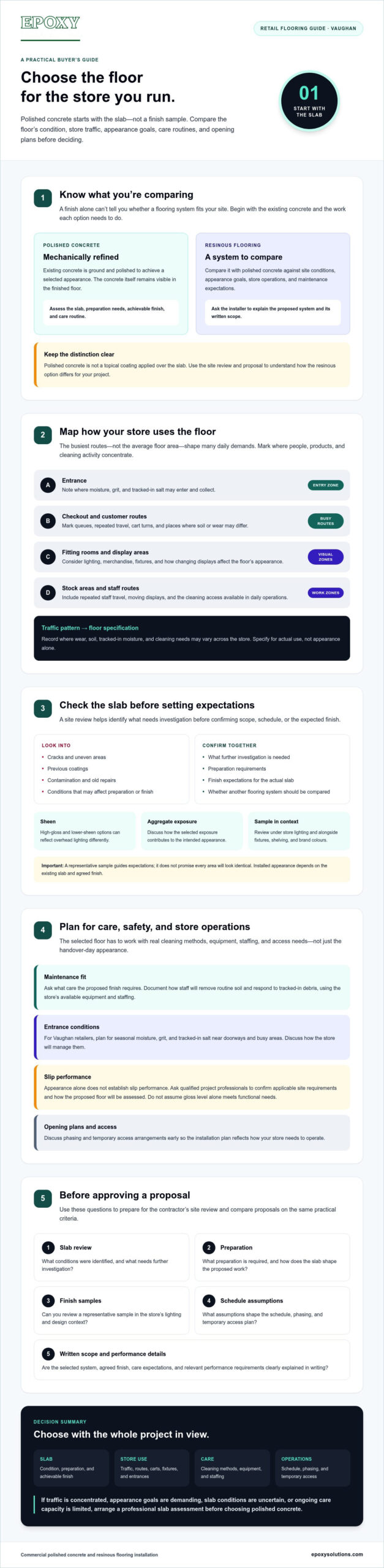
Start with what the floor needs to do. Polished concrete is existing concrete mechanically refined through grinding and polishing to achieve a selected appearance. It isn’t a topical coating applied over the slab, so the concrete itself remains visible in the finished floor. The Polished concrete overview provides background on the process and its characteristics.
For a retailer considering retail store polished concrete Vaughan options, suitability depends on expected foot traffic, design goals, slab condition, and the team’s ability to follow an appropriate maintenance plan. An entrance or checkout area may experience different wear and soil than a fitting room or display zone. Specify the floor around actual use, not appearance alone.
What polished concrete can contribute to a retail environment
A continuous concrete surface can give a store a cohesive foundation. The selected sheen and aggregate exposure influence how the floor looks under the lighting and alongside product displays, customer routes, and brand colours. Review a representative sample in context where possible. The installed appearance depends on the existing slab and the agreed finish, so use a sample to guide expectations rather than as a promise that every area will look identical.
When the existing slab needs closer evaluation
Cracks, uneven areas, previous coatings, contamination, and old repairs all warrant discussion before the work is scoped. These conditions may affect preparation, the achievable finish, or whether another flooring system should be compared. A clean-looking surface doesn’t reveal every condition beneath it, and visible damage alone can’t predict the finished appearance. A site review helps identify what needs investigation before setting scope, schedule, or expectations.
Maintenance matters as well. Consider how staff will remove routine soil and respond to tracked-in debris. Ask what care the proposed finish requires, and check that the routine is realistic for your store’s equipment and staffing. A floor that looks right at handover still needs an upkeep plan that fits daily operations.
Takeaway: If your store has concentrated traffic, demanding appearance goals, uncertain slab conditions, or limited capacity for ongoing floor care, arrange a professional slab assessment before choosing polished concrete.
How Vaughan retail conditions shape polished concrete performance
Choose a finish for the store’s actual use, not just a showroom image. Before specifying polished concrete, map the main entrance, checkout, fitting rooms, stock areas, and customer routes. Note where queues form, carts turn, displays move, and staff travel repeatedly. These patterns help show where wear, soil, and cleaning needs may differ across the same floor.
Store traffic patterns should shape the flooring specification because the busiest routes, not the average floor area, define many of the floor’s daily demands.
Match the finish to traffic, lighting, and merchandising
Customer volume, carts, display fixtures, and furniture all affect how the floor is used and seen. A high-gloss finish may reflect overhead lighting differently from a lower-sheen option. Merchandise and changing displays can also alter the impression of the space. Separate the visual brief from practical requirements such as routine cleaning and expected traffic. Review a representative sample under the store’s lighting and alongside its shelving, fixtures, and brand colours. The installed result can vary with the slab and agreed specification.
Plan for entrances, cleaning, and daily operations
For Vaughan retailers, seasonal conditions make entrances a practical planning priority. Moisture, grit, and tracked-in salt can collect near doorways and travel into checkout lanes and other busy areas. Identify where these materials are likely to enter and accumulate, then discuss how the store will manage them. Before settling on a finish, document the cleaning methods, equipment, and maintenance capacity available to the owner or facilities team.
Appearance alone doesn’t establish slip performance. Ask qualified project professionals to confirm the requirements that apply to the site and how the proposed floor will be assessed against them. Clarify how entrance conditions, cleaning practices, and the chosen finish factor into the specification. Don’t assume a particular gloss level automatically meets functional needs.
For retail store polished concrete Vaughan projects, make the site review more useful by bringing a floor plan, marking high-traffic routes, describing cleaning routines, and noting seasonal entrance challenges. An installer can then consider operating requirements alongside the slab and proposed finish. A provider experienced in commercial polished concrete flooring can help frame these questions before the specification is finalized.
Polished concrete or resinous flooring: compare the right Vaughan store criteria
Neither system suits every retail space. Polished concrete refines the existing slab, so its condition and the desired concrete finish are central to the decision. Resinous flooring is installed over a prepared substrate and may suit a brief that calls for a specified coating or specialized surface. Compare both options against store use, appearance goals, cleaning practices, and project constraints. The polished concrete versus epoxy flooring cost guide discusses cost factors, but it doesn’t replace a site-specific proposal.
Where polished concrete may fit the brief
Polished concrete may suit a store when the existing concrete, design intent, and planned use align with the finish that can reasonably be achieved. Cracks, repairs, coatings, uneven areas, or contamination can affect preparation and appearance. Don’t assume a concrete floor is a candidate based on a quick visual check. Request a project-specific assessment and confirm how the slab’s condition may influence the scope and agreed finish.
When to assess a resinous flooring alternative
Consider a resinous system if the brief calls for a particular coating or specialized surface. Compare the options using the same criteria: substrate preparation, cleaning expectations, anticipated downtime, and intended store use. Ask for system-specific documentation rather than relying on broad claims. For wider context on epoxy systems, consult this high-performance epoxy flooring guide, while confirming that its information applies to the retail project under review.
Use the comparison below to focus contractor discussions. General descriptions can’t confirm how a system will perform on a particular slab, so verify the relevant details at the site.
| Project criterion | Questions to ask | Details to verify on site |
|---|---|---|
| Substrate condition | Can the slab be polished, or is a resinous system worth assessing? | Cracks, uneven areas, prior coatings, contamination, and repairs |
| Appearance | Which finish supports the store’s lighting and merchandising? | Representative sample, slab variation, and agreed finish expectations |
| Operations | How will traffic, cleaning, and access affect the choice? | Busy routes, cleaning methods, preparation, and project-specific downtime |
| Maintenance | What routine care does each proposed system require? | Applicable system documentation and the store team’s capacity |
For a retail store polished concrete Vaughan project, compare documented requirements and site findings, not just finish images. A qualified installer should explain limitations and preparation needs before you select a system.
How to vet a polished concrete contractor in Vaughan before approving the project
A polished floor depends on the assessment and scope behind it. For a retail store polished concrete Vaughan project, screen contractors in a consistent order and require clear answers before approving the work. A site visit should lead to a project-specific proposal, not just a general finish description.
Use this screening sequence
- 1. Site review: Ask how the contractor evaluates the slab, including cracks, uneven areas, existing coatings, contamination, and repairs. Find out which conditions could change the proposed work or affect the finished appearance.
- 2. Written scope: Request a clear description of preparation, identified repairs, the proposed finish, and exclusions. Ask how limitations will be explained and what findings could prompt a revised scope.
- 3. Finish samples: Review a representative sample and agree on what it demonstrates. Discuss how the actual slab may vary from it, and identify which finish details need approval before work begins.
- 4. Schedule and access: Confirm schedule assumptions, access requirements, protection of adjacent areas, and whether the store needs closure or phased work. Identify who coordinates decisions among the owner, facilities team, store staff, and contractor.
- 5. Documented expectations: Ensure the proposal records the agreed scope, finish expectations, project assumptions, and how changes will be reviewed and approved. Ask what criteria will be used to assess the completed work.
A useful proposal connects observed site conditions to specified work and acceptance criteria. If a contractor uses broad terms such as “premium finish,” ask for details you can compare: planned preparation, proposed finish, relevant limitations, and how completion will be assessed. Specific language reduces the risk of different assumptions about appearance or scope.
Request examples of comparable commercial projects, then ask what made those sites similar to yours. A photograph alone can’t confirm the slab condition, preparation, lighting, or operating requirements behind the result. Examples are most useful when the contractor can explain those differences clearly.
Before signing, confirm how changes are documented and who can approve them. The store’s decision-maker should understand the implications of scope changes, access restrictions, or discoveries during preparation. Keep the final proposal and approvals together so everyone is working from the same expectations.
To discuss site-specific requirements, contact Epoxy Solutions™ about commercial flooring.
Plan a Vaughan retail polished concrete project and take the next step
A sound project plan starts with the store, not a predetermined finish. Define how the space operates, gather available information, and use an on-site review to shape the flooring proposal. For a retail store polished concrete Vaughan project, this process helps align the specification with the slab, design goals, and practical limits on store access.
Prepare a useful project brief
Before speaking with contractors, assemble floor plans, renovation timing, operating hours, and any known history of the concrete slab. Note the busiest routes, display and checkout areas, design preferences, cleaning practices, and performance priorities. Identify who can approve finish samples and scope changes, and whether a landlord, designer, or general contractor needs to coordinate access or other work.
Move from assessment to a clear specification
After the site review, compare the proposal with the conditions observed. Confirm the proposed flooring system, preparation scope, finish expectations, exclusions, and any slab conditions that may affect the work. Resolve questions about samples, sequencing, access, and operational impacts before approval. If the store may remain partly open, discuss possible phasing or temporary access arrangements with the contractor. The appropriate plan depends on site conditions and the agreed scope, so don’t assume a project duration before those details are assessed.
Epoxy Solutions™ provides commercial polished concrete and resinous flooring installation. A recommendation should reflect your store’s slab and operating requirements. Share relevant site details early and ask which project assumptions need confirmation before the proposal is finalized.
Ready to discuss your flooring requirements? Gather your floor plan, renovation timing, and known slab information, then discuss a commercial flooring project with Epoxy Solutions™.
Make your next flooring decision with confidence
The right retail floor starts with the store’s operating needs. For a retail store polished concrete Vaughan project, assess the slab before committing, then compare polished concrete with resinous flooring against appearance goals, traffic, cleaning practices, and site requirements.
A clear proposal connects site findings to preparation, finish expectations, access, and documented scope. These details help you compare options and plan around store operations without assuming every slab or project follows the same path.
Epoxy Solutions™ installs commercial polished concrete and resinous flooring. Share your store’s location, floor plans, known slab history, and project priorities to start a grounded discussion about the assessment and specification.
Discuss your Vaughan retail flooring project. A site-specific plan and clear expectations can help you move forward with confidence.
Frequently Asked Questions
Is polished concrete a good choice for a retail store?
Polished concrete can suit a retail store if the slab, design goals, traffic, and maintenance plan fit the proposed finish. It creates a continuous concrete surface, but the result depends on the existing floor and project specification. Consider how entrances, checkout areas, and display zones are used, then assess cleaning and slip-performance needs with qualified project professionals. For a retail store polished concrete Vaughan project, base the decision on a site review, not appearance alone.
Can an existing concrete floor be polished in a Vaughan retail space?
An existing slab can be assessed for polishing, but an on-site review is needed to establish its suitability. The contractor should check for cracks, uneven areas, old coatings, contamination, and previous repairs, then explain how those conditions could affect preparation and appearance. A floor that looks sound from above may still need closer evaluation. Retailers in Vaughan and nearby Toronto, Mississauga, Brampton, and Milton should confirm site-specific scope and project coverage before proceeding.
How does polished concrete compare with epoxy flooring for a store?
Polished concrete refines the concrete slab itself, while epoxy flooring is a resinous coating installed over a prepared substrate. The right option depends on slab condition, appearance goals, store operations, and maintenance expectations. Compare documented preparation, cleaning requirements, project access, and performance specifications rather than assuming one system is always better. Epoxy Solutions™ offers commercial polished concrete and resinous flooring installation; recommendations should reflect conditions at the specific site.
What should I ask a polished concrete contractor in Vaughan?
Ask how the contractor assesses the slab and what conditions could change the scope or finished appearance. Request details about preparation, proposed finish, limitations, schedule assumptions, access needs, and how changes will be documented. Review a representative sample and ask how it relates to the installed floor. Also request relevant commercial project examples and clear acceptance criteria. Vaughan retailers should verify project coverage and get the agreed scope and expectations in writing before approval.
How do Vaughan stores maintain polished concrete floors during winter?
Winter care starts at the entrance. Use an appropriate matting plan and regularly remove tracked-in moisture, grit, and salt so abrasive debris doesn’t spread through customer routes. Ask the flooring contractor which cleaning methods and products suit the specified finish, then give staff a consistent routine to follow. Keep entrance areas under closer observation during wet or slushy conditions, and confirm site-specific slip-performance requirements with qualified project professionals.
How long does retail store polished concrete installation take?
There’s no reliable duration to quote without reviewing the project. The schedule can depend on floor area, slab condition, required preparation, finish specification, access, and whether work is phased around store operations. Ask the contractor to identify schedule assumptions, sequencing, access restrictions, and conditions that could affect the plan. Confirm in writing when each area is expected to be unavailable and what must be complete before it returns to use.
What happens if the concrete slab has cracks or old coatings?
Cracks or old coatings don’t automatically rule out polished concrete, but they need assessment before the scope is set. Ask the contractor to document affected areas, explain proposed preparation or other work, and describe how these conditions may influence the final appearance. Confirm whether the proposed scope addresses them and who is responsible for excluded work. If the slab or finish goals don’t align, ask whether a resinous flooring alternative should also be evaluated.